The Legacy of Balthazar Roiz Castanheiro
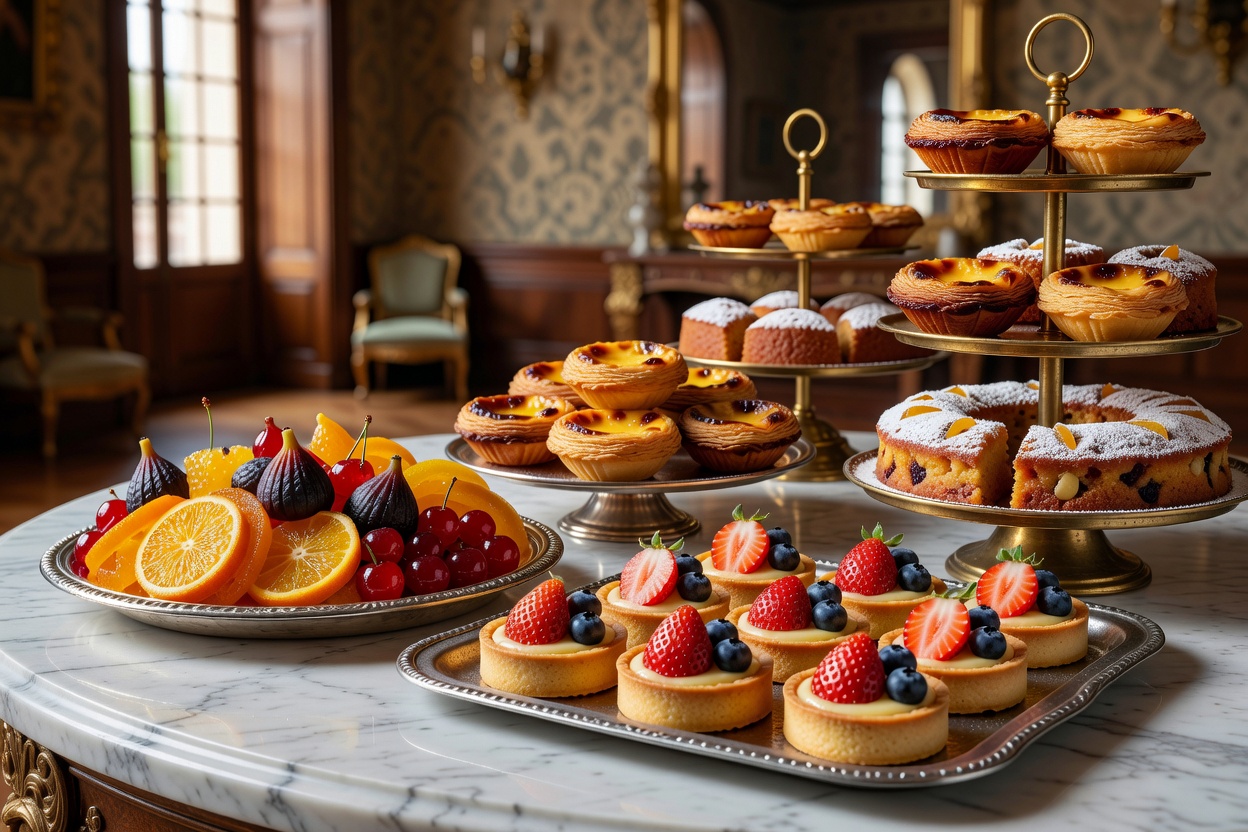
In 1829, entrepreneur Balthazar Roiz Castanheiro established a specialty confectionery boutique on the corner of Praça da Figueira, then the bustling agricultural open market of Pombaline Baixa. Castanheiro’s vision was to elevate confectionery into an aristocratic art. His meticulous attention to ingredient sourcing—Azorean dairy, Algarve almonds, and crystal refined sugar—quickly earned acclaim throughout the city.
By 1873, King Luís I conferred upon Confeitaria Nacional the official title of Official Supplier to the Royal Household of Portugal (Real Casa Portuguesa). International monarchs followed suit: warrants were granted by the courts of Spain and the United Kingdom. Today, the sixth generation of the Castanheiro family oversees operations, preserving 19th-century recipes written on parchment in the bakery’s archives.
Introduction of the Bolo Rei to Portugal
One of the most consequential culinary moments in Portuguese history occurred when Balthazar Castanheiro Júnior traveled to Paris in the late 1860s. There, he fell in love with the French holiday sweet gâteau des rois. Determined to bring this festive brioche to Lisbon, he hired a master French pâtissier and adapted the recipe using Portuguese candied citron, port wine macerations, and local pine nuts.
In 1870, Confeitaria Nacional introduced the Bolo Rei (King Cake) to Portugal. The cake became a nationwide sensation and remains the indispensable centerpiece of Christmas celebrations across the Lusophone world. During December, queues wrap completely around the block as Lisbon families wait hours to collect their holiday loaf baked according to Castanheiro’s 1870 standard.
The Upstairs Salon & Pombaline Mirrored Ceilings
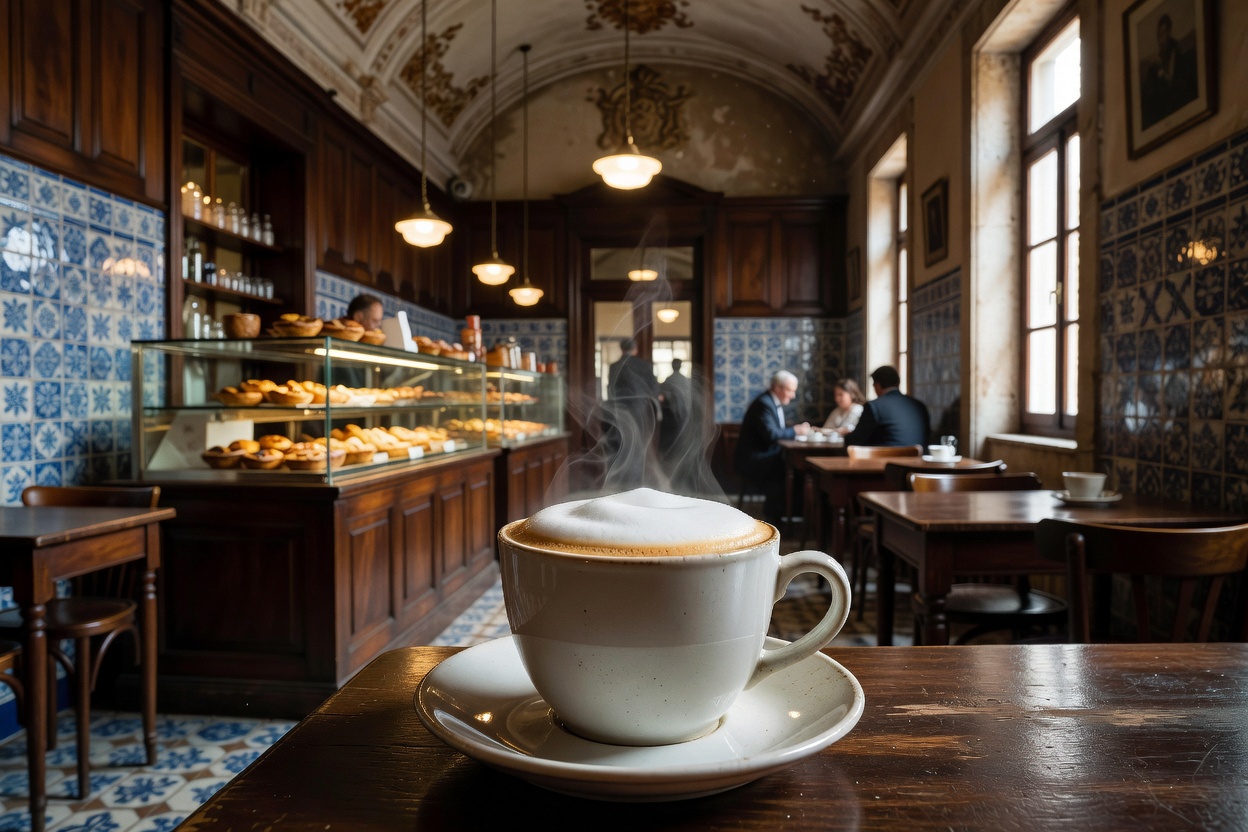
While the street level features a glittering counter laden with glazed candied chestnuts (marrons glacés), pastéis de nata, and traditional egg threads (fios de ovos), a narrow wooden staircase leads to the intimate first-floor tea salon. Here, coffered plaster ceilings, hand-painted floral panels, and original gilded mirrors reflect low-hanging brass chandeliers.
Unlike the frenetic pace of contemporary specialty shops, Confeitaria Nacional maintains old-world service. Servers in traditional uniform deliver silver teapots, porcelain teacups, and tiered dessert stands, offering respite from the bustle of Baixa’s transit hub outside.
| Confection | Historical Origin | Key Ingredients | Recommended Pairing |
|---|---|---|---|
| Bolo Rei | Introduced 1870 from France | Brioche dough, port wine, raisins, candied pumpkin | Vinho do Porto Tawny or Bica Pingada |
| Pastel de Nata | 19th-century Pombaline formulation | Crisp puff pastry shell, dairy custard, lemon peel | Café com Leite (meia de leite) |
| Broa de Mel | Conventual Portuguese baking | Cane molasses, rye flour, star anise, cinnamon | Black Earl Grey Tea or Espresso |
| Marrons Glacés | French royal court technique | Selected European chestnuts, vanilla sugar glaze | Sparkling mineral water & Single Bica |
Practical Visitor Advice
For travelers wanting to experience authentic Portuguese conventual sweets beyond the standard pastel de nata, Confeitaria Nacional is without peer. It remains one of the few places in Lisbon that creates genuine toucinho do céu (almond egg cake) and queijadas de Sintra according to century-old proportions.
- Pros: Six generations of continuous family stewardship; the historic birthplace of Portugal's Bolo Rei; exquisite second-story salon with views over Praça da Figueira.
- Cons: Peak holiday periods (especially November and December) bring immense queues for baked goods.
- Recommended Order: Ascend to the second-floor salon for afternoon tea with a slice of Bolo Rei (available year-round) and a dark espresso.